Few lakes in Victoria have transformed as dramatically, or as quickly, as Rocklands Reservoir. Since first filling in 1953, Rocklands has always offered fishing opportunities. Early on, it was best known for trout and redfin, although it never quite reached the fame or productivity of nearby Toolondo, despite its vast size.
The millennium drought changed everything. Water levels crashed, carp flourished, and for many years fishing at Rocklands became little more than a side activity for campers. That all began to change in 2017, when a major native fish stocking program kicked off with 50,000 Murray cod. Since then, millions of Murray cod, golden perch and estuary perch have been released, complementing existing populations of redfin, trout, and a small number of cod and bass already present. Stocking numbers like this weren't possible 15 years ago, but today the Victorian Fisheries Authority has been able to build up many new native fisheries in record time with heavy stocking regimes.
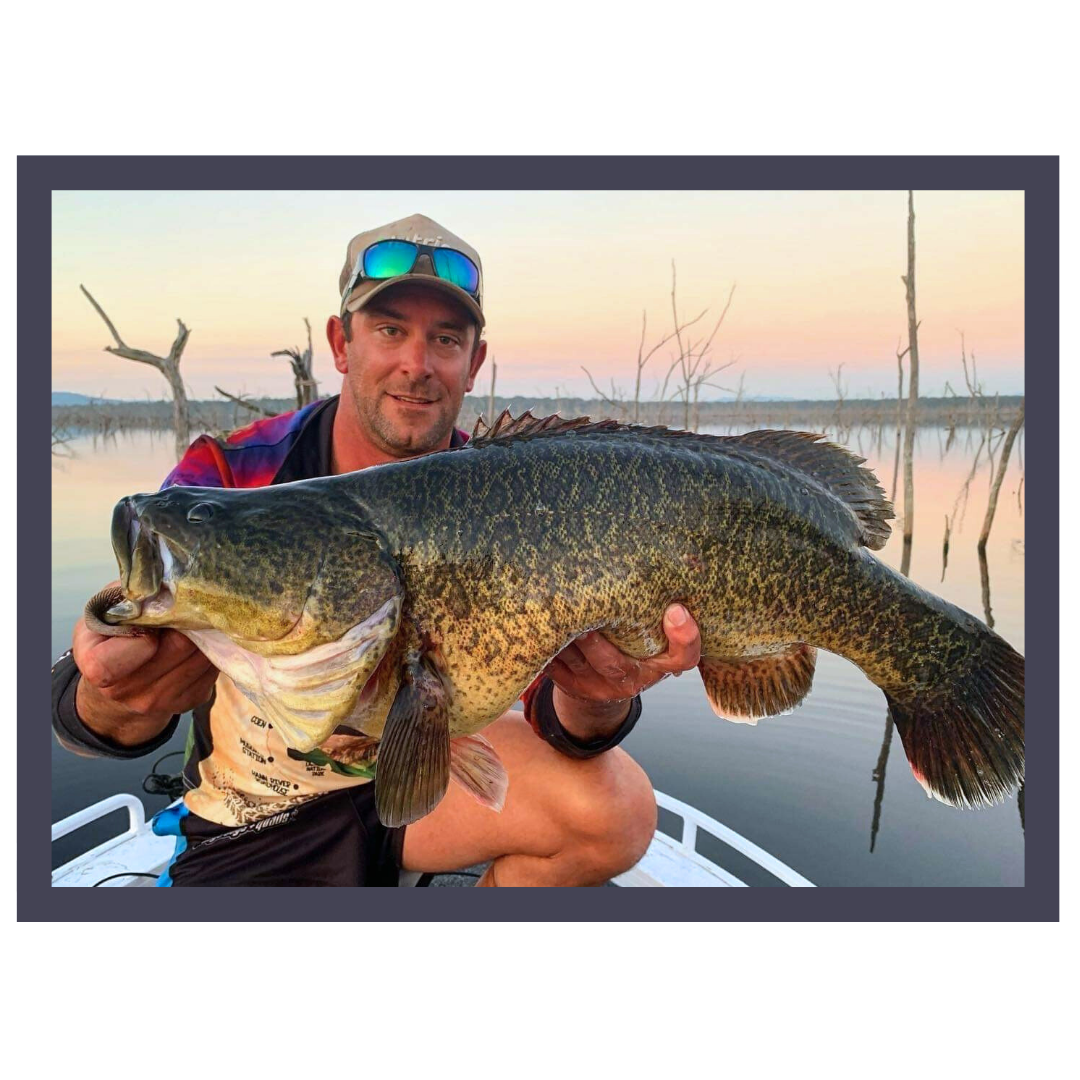
The results have been extraordinary. The fish are growing rapidly, and Rocklands is now regarded as one of the best mixed fisheries in the state. Six-year-old stocked cod are already exceeding 80cm. The 2022 floods pushed the lake to nearly 70% capacity, inundating vast areas of new ground and triggering a boom in food availability. This rapid rise allowed fish to spread, feed heavily, and put on serious condition.
With several boat ramps, hundreds of kilometres of shoreline, and bush campsites scattered all around the lake, Rocklands now offers outstanding access for both boat and land-based anglers. If Rocklands hasn’t been on your radar, it should be now!
Murray Cod
Murray cod are the headline act at Rocklands. Thanks to historic (illegal) stockings, a very small number metre-long cod already existed in the system, and the VFA-stocked fish are now commonly up to 85cm and climbing fast. Cod can be found throughout the lake, but, as with most impoundments, the old river and creek channels are prime areas. Trolling deep-diving hardbodies along the edge of original Glenelg River channel is a reliable way to locate fish. Surface fishing is easily the most exciting method. Warm summer evenings and first light are prime times to throw paddlers, with explosive strikes almost guaranteed to leave an impression. Casting spinnerbaits, chatterbaits and hardbodies through the thousands of standing trees is also highly effective. Purple, red and black remain standout colours. Use your sounder to locate submerged or fallen timber and focus your casts around these areas. Rocky banks and boulder piles are well worth fishing too, particularly early in the season, as they warm quickly and attract bait and cod alike. Good lure choices include the Balista Hunchback surface paddlers and Dyno divers, Stumpjumper No. 1 & 2, TT and Spinwright 1/2oz spinnerbaits, Spinwright Fluff Balls, and Jackall Pompadours. Make sure your gear is up to it; cod don't fight particuarly hard, but hook an 85cm fish near heavy timber and you won't regret selecting a heavier rod!
For those fishing from the bank or camp, bait is very effective. Live yabbies, scrubworms or even cubes of cheese will all take cod and offer a relaxed way to soak a line while enjoying the lake.
Golden Perch (Yellowbelly)
Golden perch are now one of the most common captures at Rocklands. They’ve been stocked in huge numbers, are growing quickly, and fish approaching 60cm, thick across the shoulders, are being caught regularly.
From the bank, live yabbies or worms fished on a paternoster rig are hard to beat. From a boat or shoreline, casting vibration lures such as the Jackall TN60, 1/4oz spinnerbaits from Spinwright, Z-Man & Gulp 2.5" grubs in the black colour and trolling medium-depth hardbodies near timber and structure is a very effective approach. You don’t need specialised gear: a typical bream, trout or redfin outfit is perfect. Just step your leader up to around 10–12lb and favour darker lure colours.
The lower end of the lake, particularly around the dam wall (outside exclusion zones), is a consistent hotspot in spring and into early summer.
Redfin
For decades, redfin were the backbone of Rocklands fishing. While native species have stolen the spotlight, redfin are still abundant and provide excellent sport and eating. Larger models often turn up as by-catch when targeting cod or golden perch. If numbers are the goal, downsize to 2” soft plastics and small hardbodies. Jigging standing timber, working schools with vibration lures, or trolling small hardbodies can all produce fast action.
Worms remain the universal bait and will catch redfin as well as most other species in the lake. Redfin can be found throughout Rocklands, although growing cod numbers have thinned them out in most areas. They provide a very rich and abundant food source whilst small!
Australian Bass & Estuary Perch
Rocklands holds some genuinely trophy-sized Australian bass, with fish to around 60cm reported, as big as you’ll find anywhere in the country. Targeting them is challenging. The lake is enormous, the bass population is relatively small, and the fish are notoriously finicky. Any lure used for redfin or golden perch will take bass: 3” soft plastics, mid-running hardbodies, TN60s and small spinnerbaits are all suitable. Success usually comes from time on the water and finding the right zones.
Estuary perch have also been stocked, but captures are still rare. They are likely still growing and should become more commonly caught in coming seasons. If bass or estuary perch are your main target, the Glenelg River downstream of Rocklands offers far more consistent fishing, with strong populations now moving between the estuary and Balmoral over 250km upstream thanks to increased environmental flows.
Trout
Trout have never made Rocklands famous, but quality fish are certainly present. As long as stocking continues, there will be brown and rainbow trout available, with fish to around 2kg not uncommon. With no natural spawning anymore and vast expanses of water, numbers are low, but average size is high. Reports from the last couple of years include multiple 1.5–2kg browns taken trolling Tassie Devils near the wall.
If you’re serious about trout, cover water. Work wind lanes with hardbodies or wet flies, troll Tassies, or fish worms and mudeyes from the bank.
Carp
The illegal stocking of European Carp into Rocklands, and then the subsequent spread down into the Glenelg River has become one of the worst, and most costly, ecological impacts on the Glenelg system. Carp are widespread throughout the lake and can exceed 6kg. While often maligned, they now form an abundant food source for both cod and golden perch. Most carp are caught by campers using worms, corn or bread, either unweighted, under a float, or on the bottom. They’re not difficult to catch, but just remember it is illegal to return carp to the water.