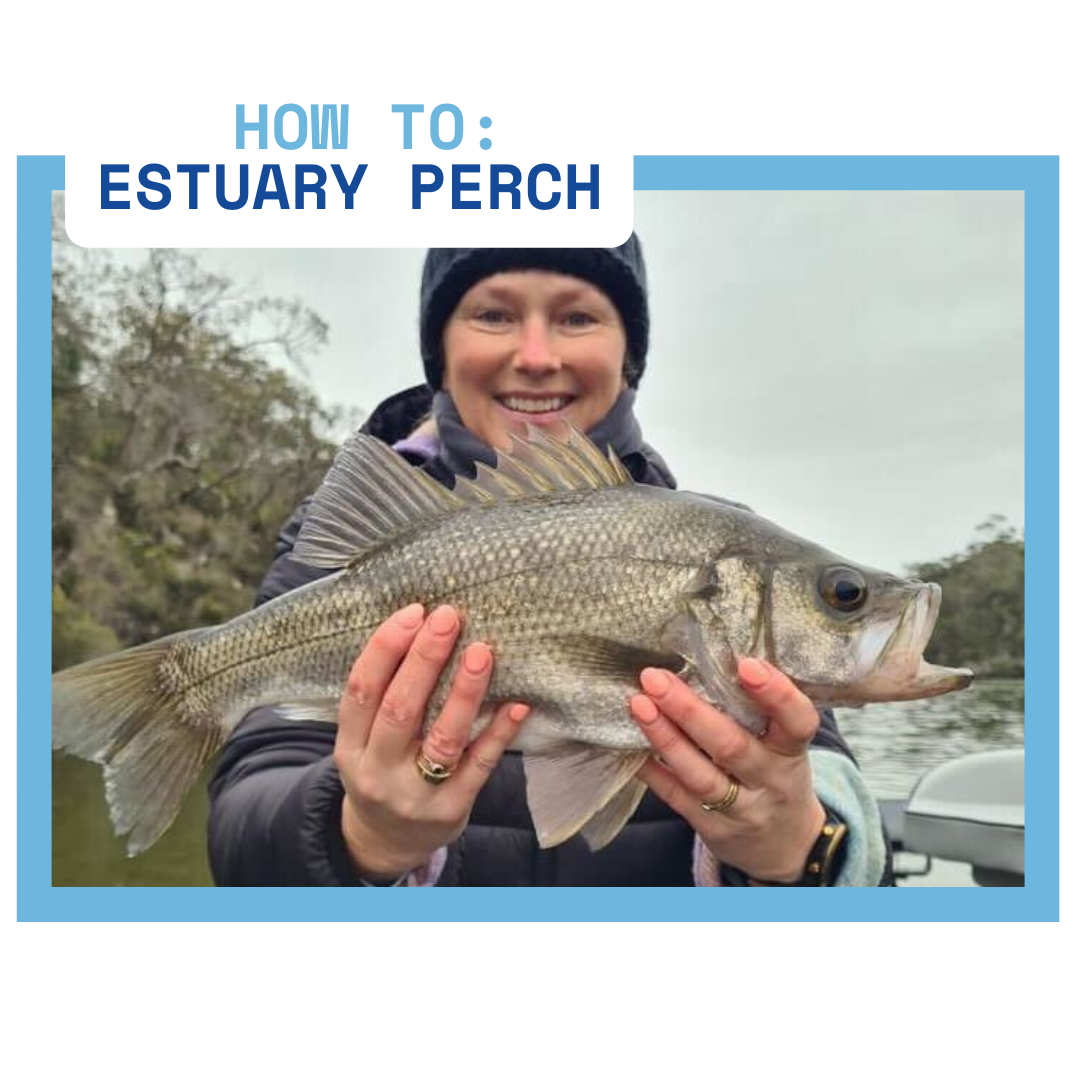
It’s been a big week for estuary perch fishing, so I thought it was the perfect opportunity to take a closer look at one of the most striking and exciting species in our local waterways. In this article, we’ll explore what estuary perch eat, the structure they relate to, and the key estuaries available to us here in the South West and beyond.
Understanding Estuary Perch
The estuary perch is a native Australian species and one that many anglers have cut their teeth on, particularly when casting lures and soft plastics. They are often mistaken for Australian bass, but there are several clear differences between the two.
One of the most noticeable distinctions is the head profile. Estuary perch have a slightly scooped or concave forehead, whereas bass have a more rounded head shape. Eye size is another giveaway — estuary perch have a noticeably larger eye. The colour also differs slightly, with perch typically displaying a more brown-toned eye, while bass tend to have a reddish hue.
The lateral line on estuary perch is generally more pronounced, and their scale pattern appears larger and more defined than that of bass. These features make identification straightforward once you know what to look for.
Seasonal Movements & Behaviour
Estuary perch are highly adaptable fish, thriving in estuary systems and coastal lakes. Their behaviour changes significantly throughout the year.
During winter, they move toward the lower sections of estuaries in search of saltwater to spawn. At this time, they often school tightly in specific depths where salinity and oxygen levels are ideal. When you locate these schools, the action can be exceptional. This is where quality electronics become invaluable as finding those concentrated fish and focusing your efforts in the right zone can make all the difference.
In summer, as water temperatures rise, perch push up into shallower water. This is when the real fun begins. They can be caught on a wide range of lures, but surface fishing is what excites most anglers.
Cicada-style surface lures are particularly popular due to their ease of use. Unlike walk-the-dog or pencil-style lures that require precise rod work, cicada lures simply need a slow, steady retrieve with the occasional pause which is often when the strikes occur. Watching a perch launch itself at a surface lure is something every angler should experience.
Jerkbait-style lures are another highly effective option, offering excellent casting distance and swimming action straight out of the box. Soft plastics remain a favourite for many anglers because of their versatility. By simply adjusting jig head weight, changing the style, or rigging weedless, you can effectively fish the entire water column — surface, mid-water and deep. This flexibility is often an advantage over hard-bodied lures, which are restricted to a fixed diving depth and can be more prone to snagging.
So what are some of the popular lures used to target EPs locally? Starting from the surface - it always pays to have a cicada (Megabass Siglett, Jackall Suisen) in the box, as well as a walker (Daiwa Infeet Slippery Dog) and popper (Shimano Ligen) as perch will respond to different topwaters dependent on conditions and prey source. Good jerkbaits include the Jackall Squirel 61, Daiwa Double Clutch 75 and 60mm, Ecogear SX40, Smith Jade and OSP Dunk. Blades are extremely effective during the winter months when perch school up ready to spawn; so pack some Daiwa Infeet blades and Ecogear VX35s. For soft plastics, anything 2-4" will catch them, with popular choices being Hurricane Sprats, Fish Arrow J Shads, Daiwa Bait Junkie Minnows, Flicks and Prawns, Keitech Easy Shiner and Z-Man Grubz & Slim Swimz; all matched up to a suitable (#2-1/0) jighead of a light weight (1/20th-1/8th oz).
Key Structure to Target
Like most predatory fish, estuary perch relate strongly to structure. Weed beds rich with shrimp and baitfish are prime areas, providing both food and cover. Some systems are heavily weeded, which can make landing fish challenging but that’s all part of the appeal.
Bridge pylons are another productive option. They offer protection from current and predators, and accurate casts tight to the structure can produce explosive strikes along with the occasional bust-off. Fallen timber is perhaps the most common structure perch hold on in South West rivers. Systems like the upper Glenelg and Curdies rivers are littered with submerged logs and snags that regularly hold quality fish. Casting small hard bodies tight along the edges of these structures has introduced many anglers to perch fishing over the years.
Boat hulls, jetties and pontoons also provide shade and cover, making them reliable holding areas particularly during brighter conditions.
Down in the lower reaches of estuaries such as the Hopkins and Curdies, perch will often sit tight on underwater reefs so it really pays to use your sounder to find these spots, as potentially 1km of river might only have a small patch of reef 15m long that's holding big numbers of fish.
South West Estuaries
We are fortunate in the South West to have several productive estuary perch fisheries.
The Glenelg River stands out as the largest and most versatile system, offering over 60km of navigable, fishable water, with EPs heading all the way upstream to Balmoral thanks to increased environmental flows in recent years (which allow easy passage for the fish, flush out stagnant water and increase baitfish populations). It provides anglers with endless opportunities across a wide range of structure types. Closer to home, the Hopkins River is another standout, known for producing some truly impressive perch. It has yielded some of the biggest fish seen locally over the years and continues to reward those who put in the effort. The EPs in here can also be found from the mouth all the way to the falls, with the best fishing in the middle reaches.
Smaller systems such as the Fitzroy, Curdies, Barham, Gellibrand and Aire rivers are also capable of producing quality fish, often large specimens, although typically at specific times of year. This seasonal nature likely helps preserve their appeal and sustainability. The Moyne and Merri have been stocked for the first time ever in 2025 with thousands of fry, so keep an eye on these fisheries in years to come!
A True South West Favourite
Estuary perch are a true favourite for many anglers in our region. They offer year-round opportunity, incredible surface action in summer, schooling excitement in winter, and a genuine challenge around structure.
For many young anglers in particular, they are the fish that spark a lifelong obsession — and it’s easy to see why.