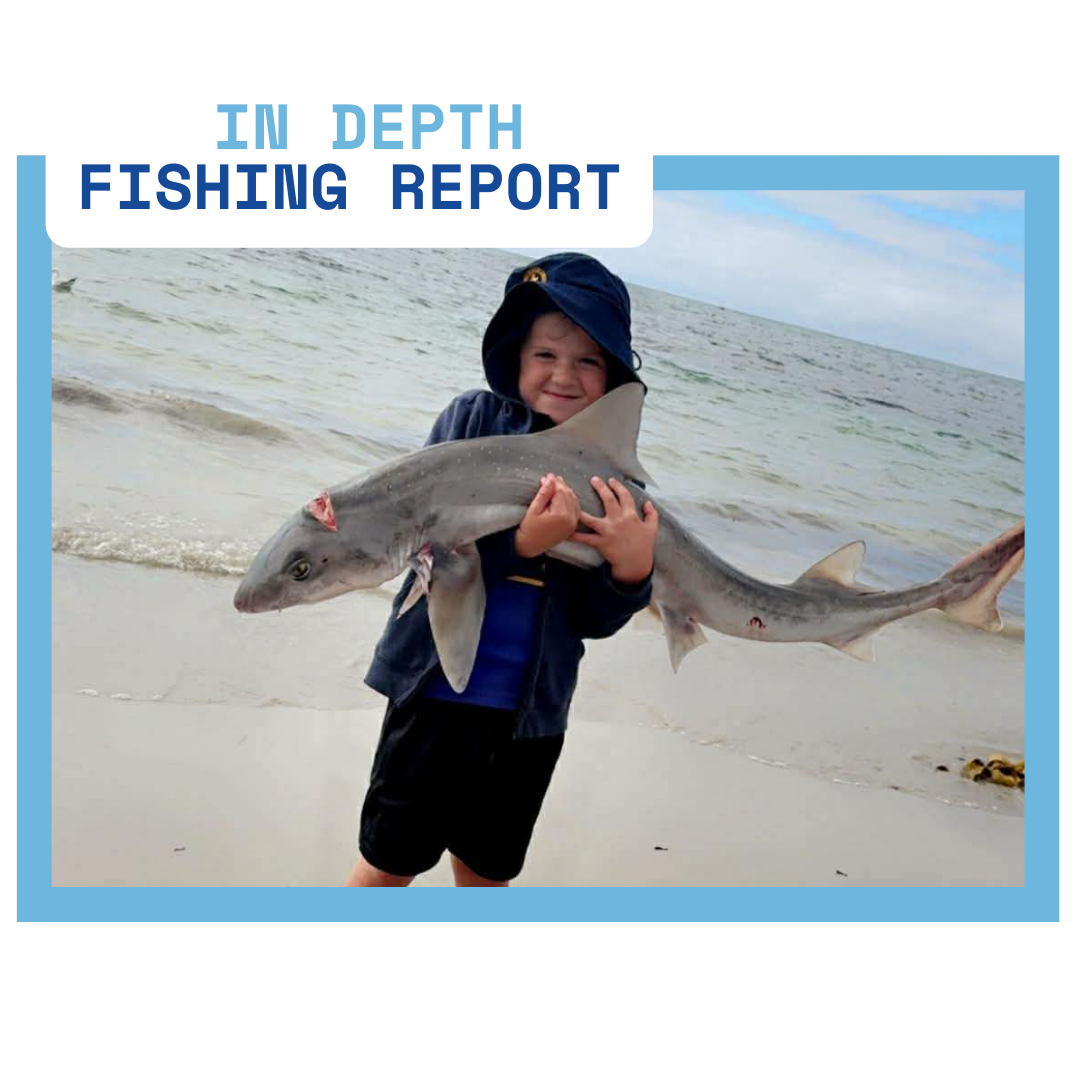
The summer heat is beginning to ease, bringing with it some interesting fishing conditions across the region. Easterly winds have long been part of our summer pattern, although the past couple of years have delivered more than our fair share. Despite this, when conditions allow, anglers have continued to find excellent fishing both offshore and throughout our local rivers and lakes.
Offshore
Offshore crews have certainly had to pick their windows carefully due to the persistent easterlies. Fortunately, the inshore action has more than made up for the lack of wider opportunities.
Matt and Hunter Cameron, along with Nathan Bramwell, fished Portland’s North Shore targeting pinkies and perhaps a shark or two. Their efforts were rewarded with solid gummy sharks around the 12kg mark, along with a pinky snapper and trevally. Fishing only a few hundred metres from shore, it highlights just how fortunate we are locally. While heading to the shelf on the perfect day is always appealing, there’s no need to leave the boat in the shed waiting — quality fishing can be found well within sight of land.
Whiting along North Shore have also been productive. Harry and Wendy Linke travelled down from Hamilton in search of some “ting” and landed over 20 quality fish. They worked hard for their catch, shifting locations several times throughout the day, but the persistence paid off.
Closer to home, reports from Port Fairy Bay and Killarney suggest improving numbers of quality whiting. While full bag limits (20 per person) have been uncommon, the size has certainly impressed. Most fish reported have been over 40cm, with some nudging the coveted 50cm mark. Fresh pipis and small strips of squid fished on Black Magic whiting rigs have been standout performers.
Berleying continues to be an effective tactic, although it does come with a downside — the ever-present Australian salmon. While they can frustrate dedicated whiting anglers, they also provide fantastic sport, particularly for kids and anyone simply looking to enjoy catching fish.
Further offshore, bottom bouncers have reported strong sessions on gummy and school sharks. Grant Bellman, his two sons, and Sam Powell headed off Warrnambool in search of sharks and enjoyed a successful day, landing quality school and gummy sharks not far from shore. A couple of snapper added to the mix, making for several excellent feeds.
Estuaries
The Hopkins River has been active, particularly along shallow flats and rock walls. Matt Price has been enjoying success from his kayak, catching bream, estuary perch and even a mulloway. While the mulloway was a smaller specimen, any mulloway from the Hopkins is a welcome sight.
Compared to the Glenelg River — which offers year-round mulloway potential — captures in the Hopkins are less frequent. This likely relates to the Glenelg’s proximity to the Coorong and Murray River systems, traditional mulloway strongholds. Regardless, reports of mulloway returning to the Hopkins are encouraging.
Bream fishing has been particularly productive, especially along rock walls where warmer edge water has increased crab activity. Crab-style soft plastics and hardbodies have been leading the charge.
Cranka Crabs remain a popular and reliable choice, but several soft plastic alternatives are also proving effective. Rapala CrushCity Tricksters, constructed from buoyant material, create a lifelike defensive crab stance when paused. Paired with VMC Grip-R jigheads and assist hooks, they have been a strong option for targeting bream.
The Ecogear Marukyu crabs are another standout. Their purpose-designed hidden weight jighead system, featuring twin trebles positioned near the claws, provides an easy rigging solution and excellent hook-up rates. A subtle twitch is often all that’s required to draw interest — and once hooked, fish rarely let go.
Over on the Glenelg River, mulloway have been caught trolling live mullet, particularly in the lower reaches on incoming tides. Reports suggest some larger fish are holding further upstream, although they remain challenging for most anglers. Focus efforts on rock walls leading into reed beds and work roughly 200 metres either side of these areas.
It’s also worth remembering that mulloway will readily take smaller presentations. The saying “elephants eat peanuts” rings true locally — many quality fish have fallen to 2.5-inch plastics rather than larger dedicated mulloway lures.
Surface fishing for estuary perch continues to impress, with more anglers targeting the upper water column. Late afternoons and early mornings remain prime times. Accuracy is critical — casting tight to structure and snags significantly increases success rates. Fish are rarely holding five metres off the bank during this time of year, nor are they likely to rise from deeper water to strike a surface lure.
Fishing tight structure inevitably means losing a few lures, but as the saying goes, you have to be in it to win it. Upgrading leader strength is essential, and running a shorter leader of around one metre often helps maintain optimal lure action while providing added abrasion resistance.
With some much-needed rain forecast later in the weekend, conditions may shift quickly in the week ahead. If you’re heading out, feel free to send through photos of your catches — we’re always happy to share them.
Until next week, tight lines and best of luck.